For Creators
How to Create UGC Ads With AI
Introduction
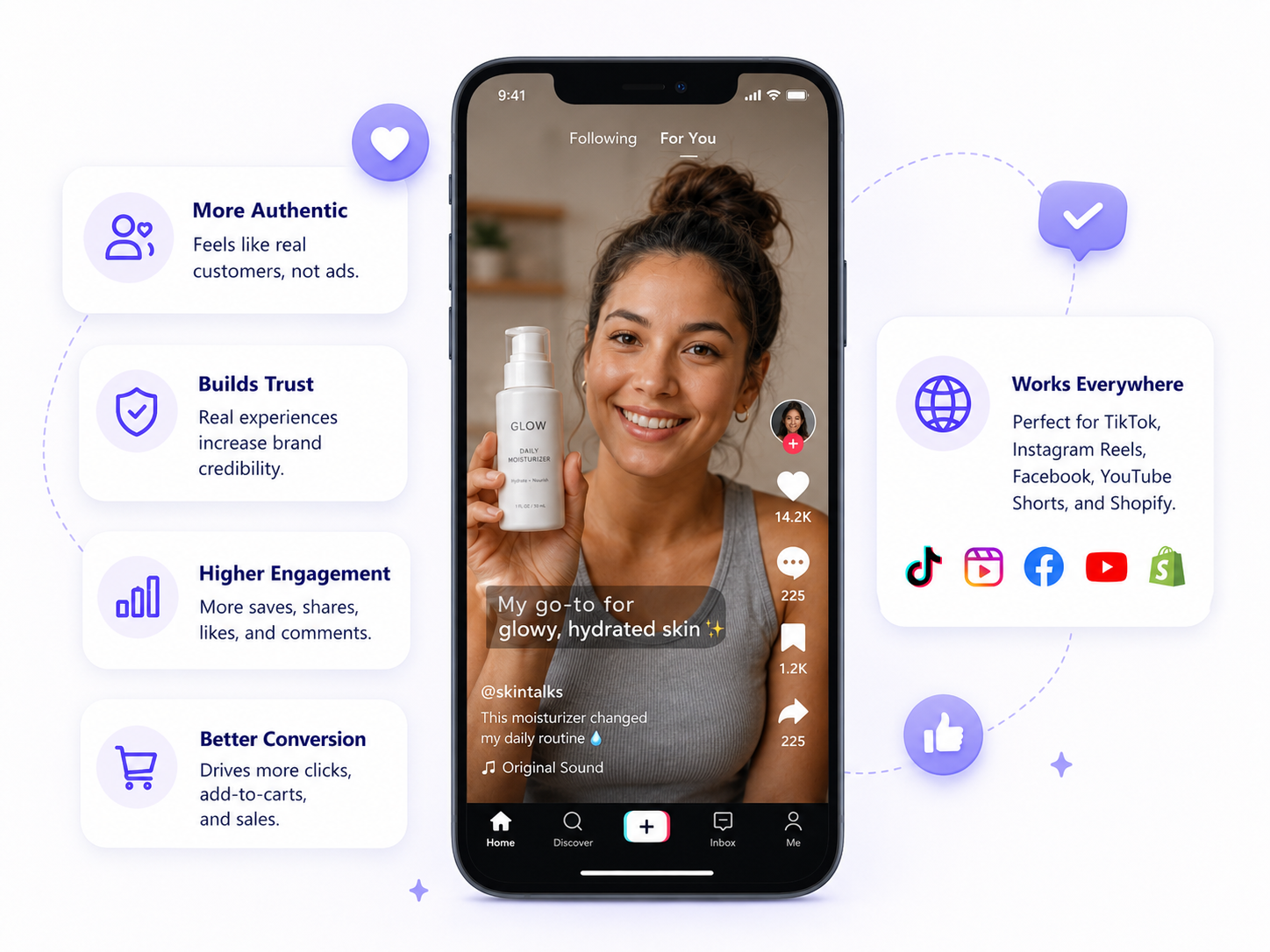
UGC ads have become one of the most effective formats for e-commerce brands. Compared with polished studio ads, UGC-style videos feel more natural, relatable, and trustworthy. They work especially well on TikTok, Instagram Reels, Facebook, and Shopify product pages.
TikTok encourages advertisers to create native, engaging, and platform-friendly creatives:
https://ads.tiktok.com/help/article/creative-best-practices?lang=en
However, traditional UGC production is not always easy. Brands need to find creators, ship products, wait for filming, review drafts, request revisions, and manage usage rights. For small-commerce teams, this can be slow and expensive.
Why UGC Ads Are Hard to Scale
The biggest challenge with UGC ads isn't creating a single video. The real challenge is creating enough videos to test.
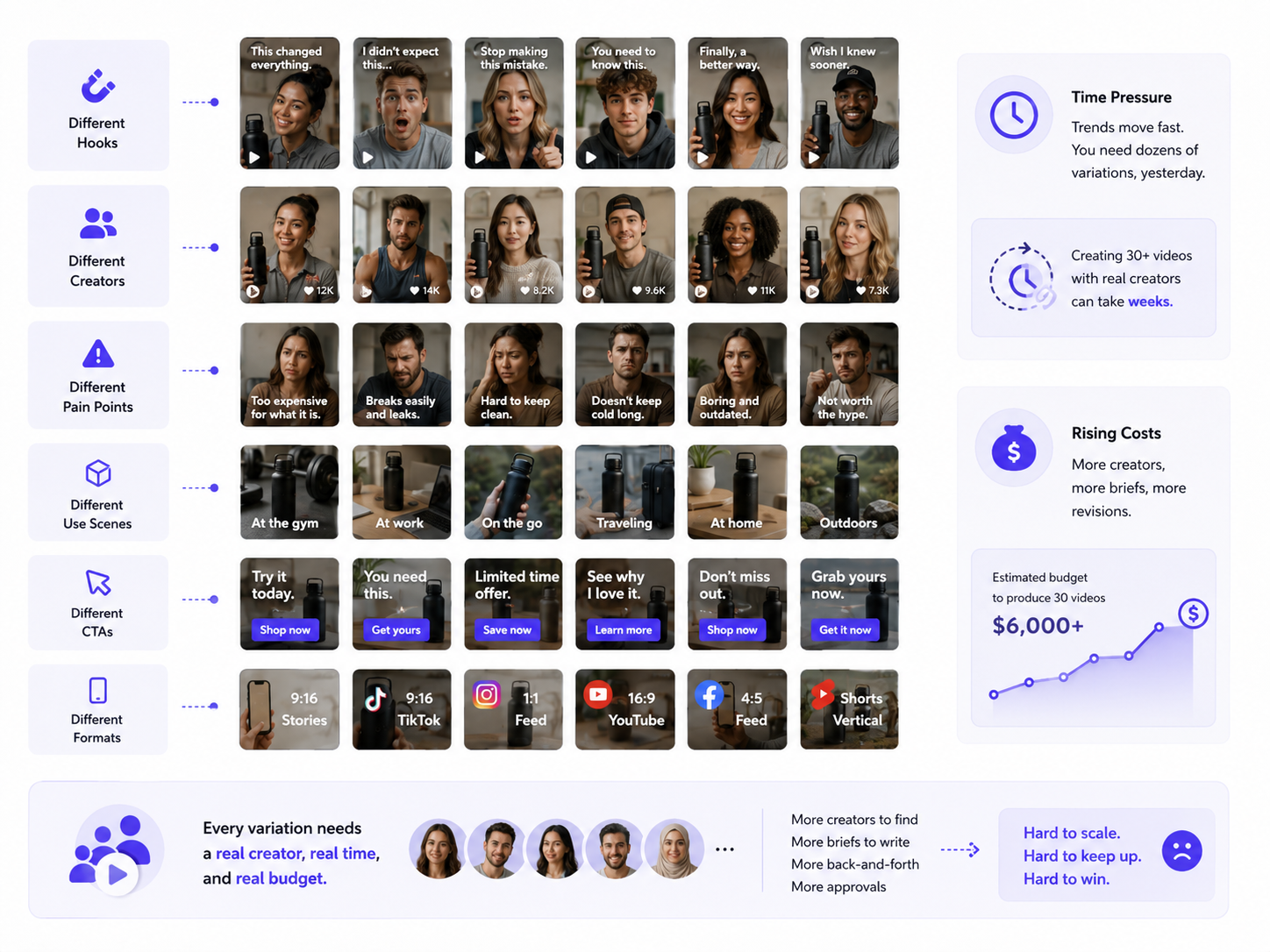
A strong UGC testing strategy usually requires:
- Multiple hooks
- Multiple creators or styles
- Different customer pain points
- Different product usage scenes
- Different CTA versions
- Short-form formats for TikTok, Meta, and YouTube Shorts
If every UGC video depends on a real creator, the cost and timeline can quickly become difficult to manage.
How AI Helps Create UGC Ads Faster
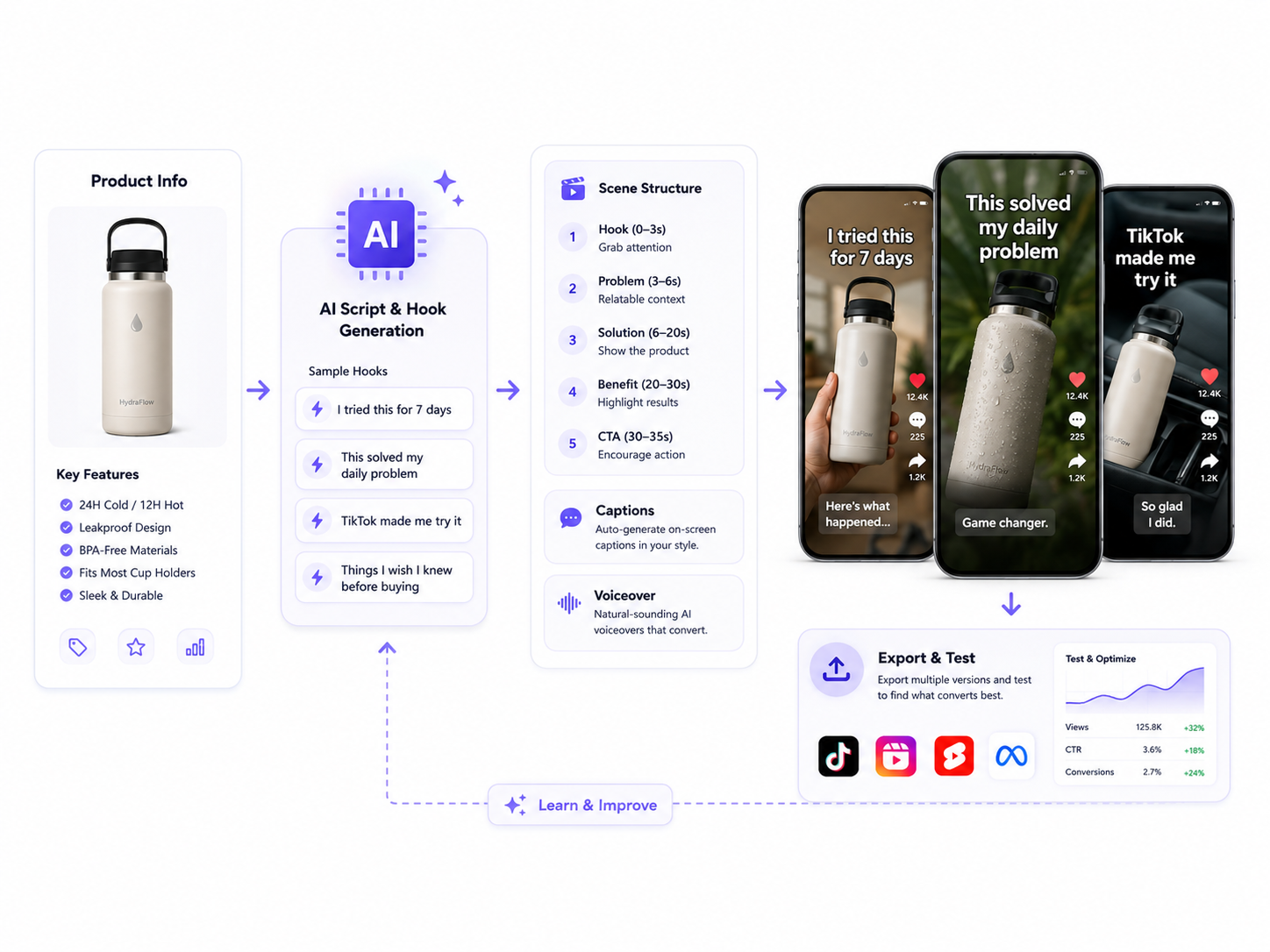
AI can help brands create UGC-style ads by generating scripts, scene structures, captions, voiceovers, and product demonstrations based on basic product information.
Instead of waiting days or weeks, brands can quickly create different UGC-style concepts such as:
- “I tried this product for 7 days.”
- “Things I wish I knew before buying this”
- “This solved my daily problem.”
- “Amazon finds you actually need.”
- “TikTok made me try it.”
The goal is not to replace real customer trust, but to create more testable content formats before investing in larger creator campaigns.
What Makes a High-Converting UGC Ad
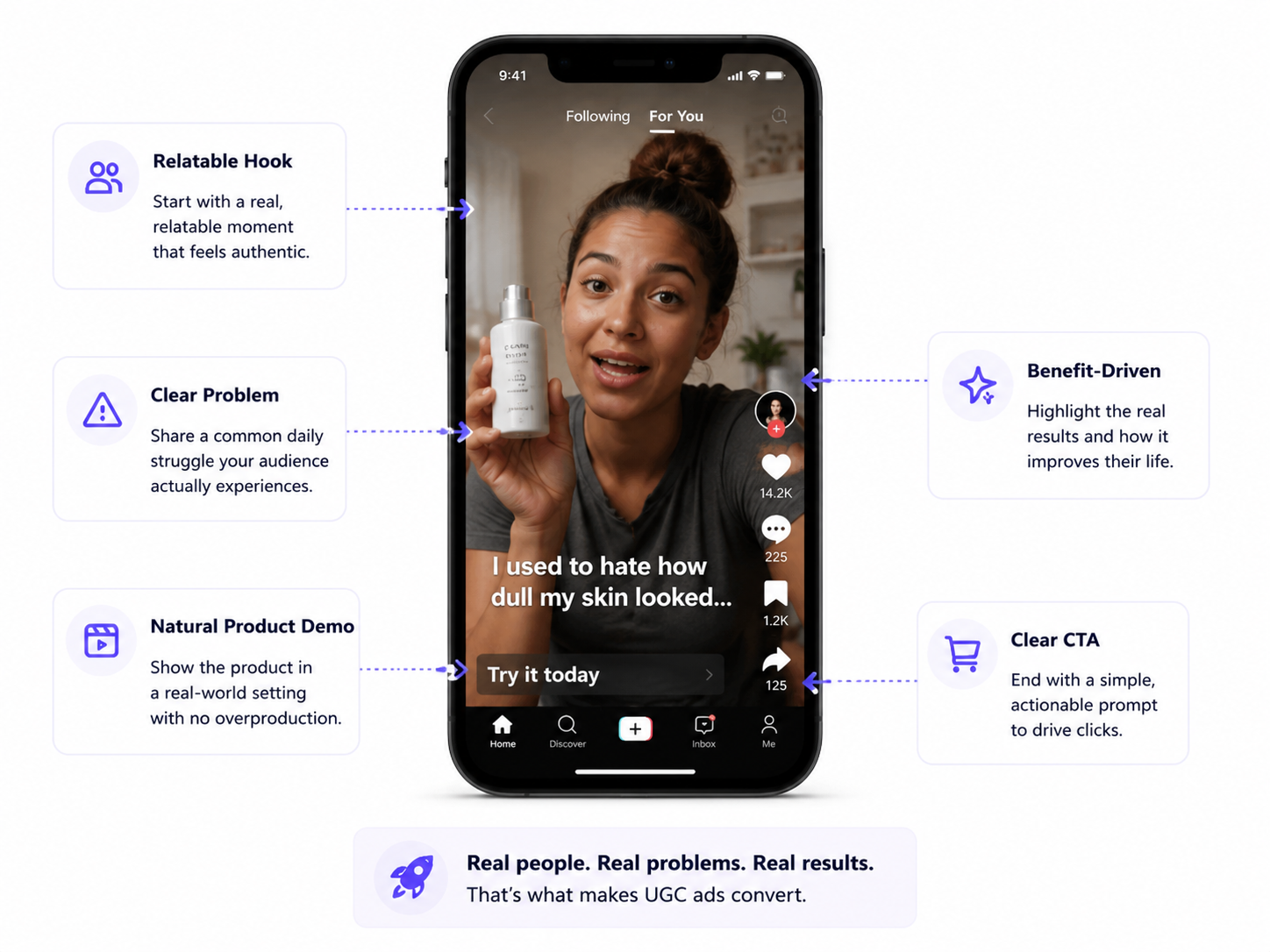
A strong UGC ad usually includes:
- A relatable hook
The first 3 seconds should feel like a real user experience, not a hard-sell ad. - A clear problem
Show the daily frustration or pain point that the product solves. - A natural product demo
Let viewers see how the product works in a simple, direct way. - A benefit-driven script
Do not only list features. Explain why the feature matters. - A clear CTA
Use direct prompts such as “Try it today,” “Shop now,” or “Get yours here.”
Meta also provides creative guidance for ads across its platforms:
https://www.facebook.com/business/ads-guide