
User Guide
How to Build an E-commerce Content Workflow
Introduction
E-commerce growth depends on consistent content output. Product pages need videos, ads need fresh creatives, social media needs daily posts, and campaigns need different versions for testing.
The problem is that most e-commerce teams still create content manually. They collect product images, write scripts, edit videos, adjust captions, resize formats, and repeat the same process for each platform.
Shopify highlights product video as an important way to improve ecommerce product presentation:
https://www.shopify.com/blog/product-video
To scale content, brands need more than one tool. They need a workflow.
What Is an E-commerce Content Workflow?
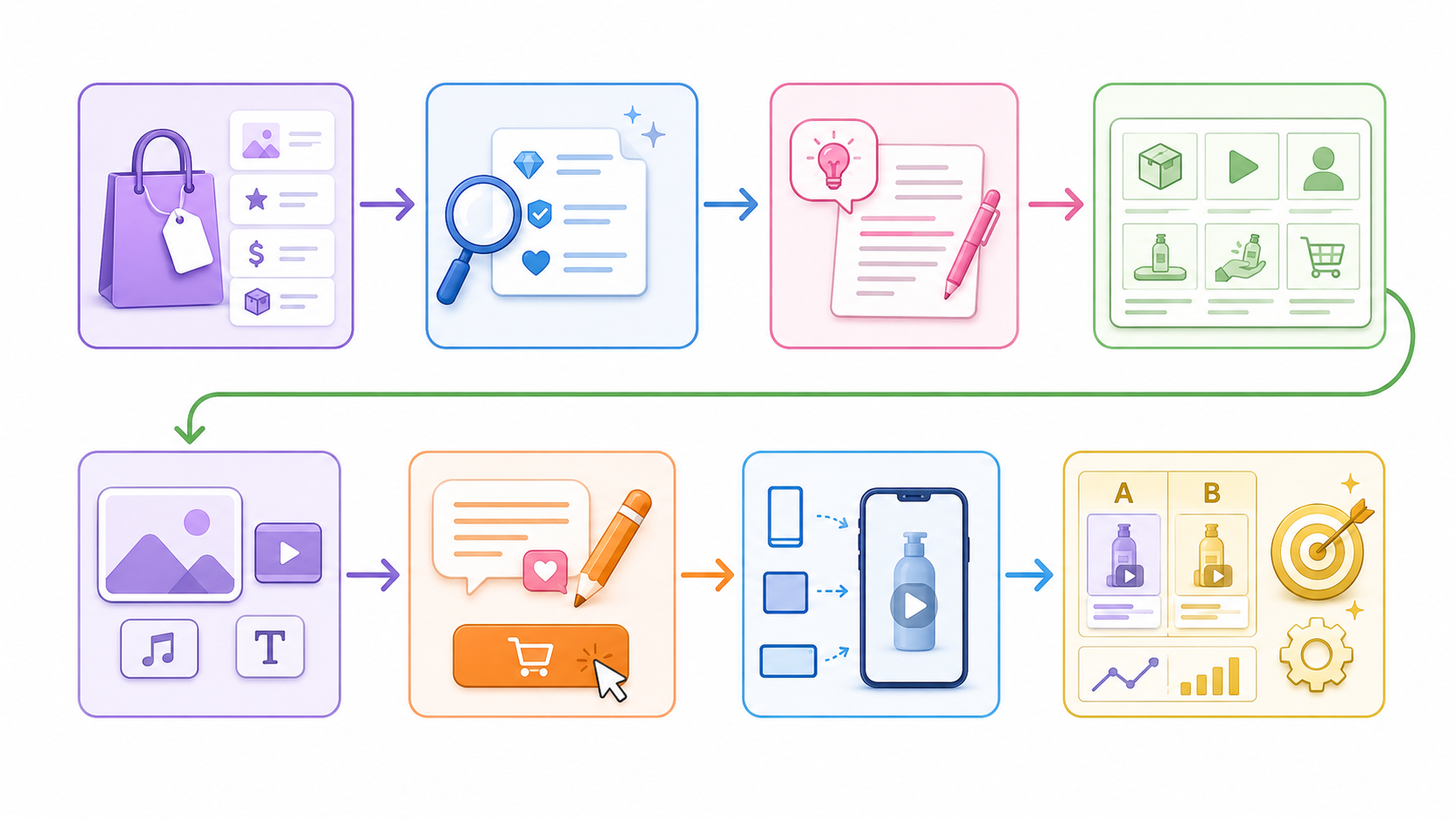
An e-commerce content workflow is a repeatable system for turning product information into usable marketing content.
A complete workflow usually includes:
- Product information collection
- Selling point extraction
- Hook and script generation
- Video scene planning
- Image or video asset generation
- Caption and CTA writing
- Platform format adaptation
- Ad testing and optimization
Without a clear workflow, teams waste time repeating manual tasks and lose consistency across content.
Common Problems in Manual Content Production
Manual e-commerce content production often creates several problems:
- Low output speed
Each video or ad creative takes too long to produce. - Inconsistent messaging
Different team members may write different product claims, hooks, or CTAs. - High editing dependency
Every version requires manual resizing, cropping, or caption adjustments. - Slow testing cycle
Teams cannot generate enough variations to quickly test hooks, audiences, and product angles. - Poor asset management
Product images, videos, scripts, and ad versions become scattered across folders and platforms.

How AI Improves the Workflow
AI can automate many repetitive steps in e-commerce content creation. It can generate scripts, product scenes, captions, voiceovers, and multiple ad versions based on structured product data.
Instead of starting from scratch every time, teams can create a workflow like this:
- Enter product information
- Select a content goal
- Generate script and visual direction
- Produce platform-ready videos
- Export variations
- Test performance
- Improve the next batch
Google Ads also emphasizes that successful video campaigns require the right objective, targeting, budget, and ad creatives:
https://support.google.com/google-ads/answer/2375497?hl=en

How BluboAI Helps Build the Workflow
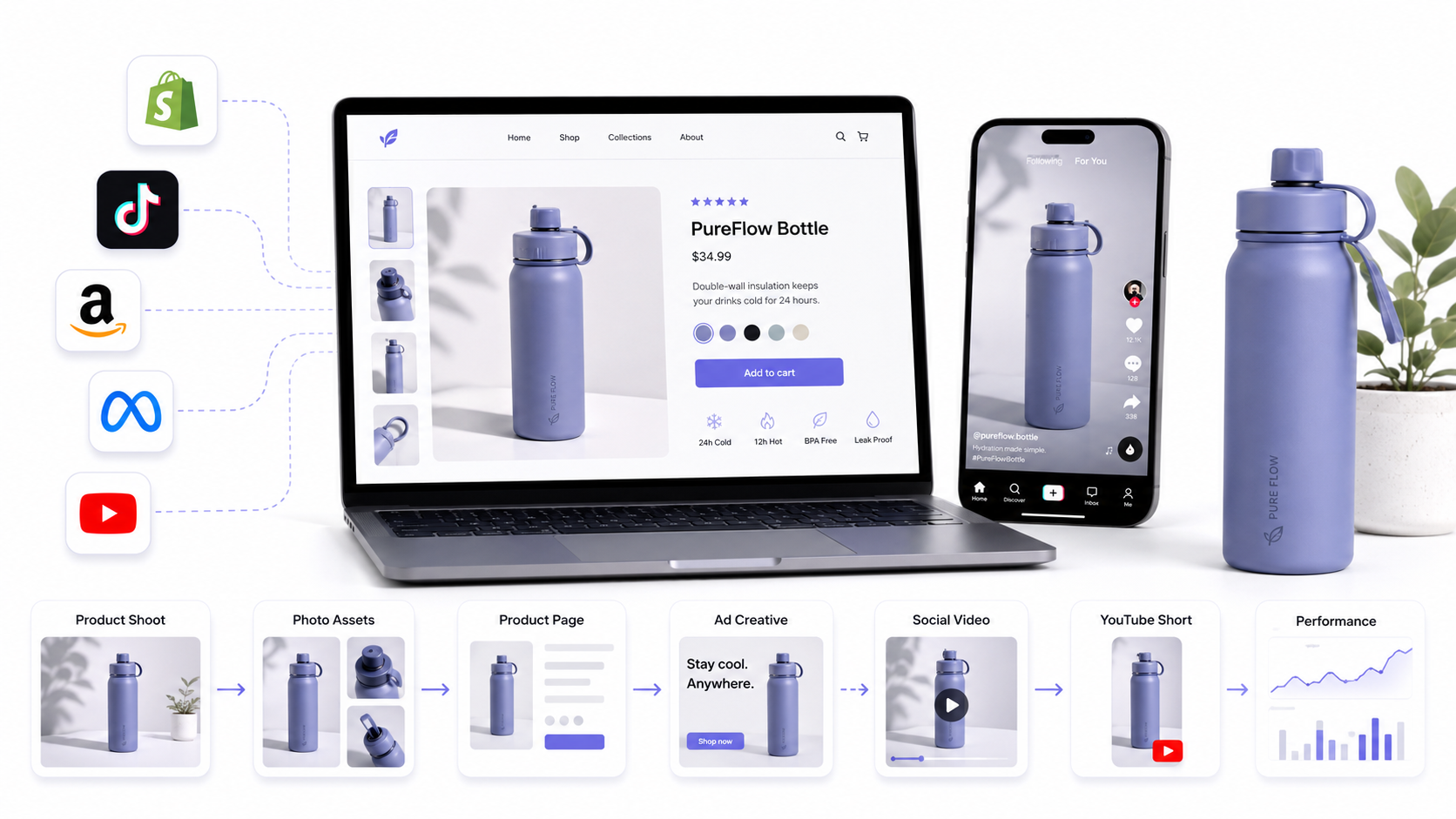
BluboAI is designed for e-commerce content production. It helps teams turn product information into video ads, product showcase videos, UGC-style ads, and platform-specific creatives.
With BluboAI, brands can:
- Centralize product information
- Use built-in e-commerce video skills
- Generate structured scripts automatically
- Keep product messaging consistent
- Create multiple creative versions
- Reduce manual editing work
- Produce content for Shopify, TikTok, Amazon, Meta, and YouTube
The workflow is simple: input product data, choose the content type, generate videos, export variations, and test.

Why This Matters for Ecommerce Brands
E-commerce competition is no longer only about product supply; it is also about creative speed. Brands that produce more testable content can find winning hooks and selling points faster.
A strong content workflow helps brands reduce production costs, increase output, and accelerate campaign learning.
Conclusion
A scalable e-commerce content workflow allows brands to move faster, test more ideas, and maintain consistent product messaging.
BluboAI helps ecommerce teams build this workflow with AI-powered video generation, built-in skills, and structured prompts. Instead of spending days editing a single video, teams can generate multiple ready-to-test creatives more quickly.
Start building your e-commerce content workflow with BluboAI:
https://www.blubo.ai